Why choose this?
Level 2 uses an AC charging circuit, commonly 240V at home. It can be plug-in or hardwired; the vehicle’s onboard AC charger sets one of the limits.
- Choose it when your normal outlet cannot keep up with your daily driving.
- Compare daily miles and available overnight hours before paying for higher output.
- A charger’s maximum rating only helps if both the circuit and your vehicle support it.
Have an electrician review the circuit, protection, panel capacity, grounding, location and applicable requirements. This page is a buying guide, not DIY installation instructions.
What to confirm before buying
Vehicle connector
Match J1772 or NACS to your vehicle’s actual inlet—not just its brand. The linked products below use J1772; other versions may differ.
Useful charging power
Ask what output your home and vehicle can support. A lower setting may meet your daily needs without a larger electrical project.
Installation route & cost
Distance, wall access, permits and repairs can matter more than the charger price. Review installation cost factors →
Compare the connection: NEMA 14-50 plug-in or hardwired. The grid below shows maximum hardwired configurations; plug-in versions of Emporia and ChargePoint are limited to 40A.
Compare compatible charger configurations
These links open individual Amazon product listings—not a live inventory or a compatibility guarantee. Confirm the exact configuration before purchase. Photos below are illustrative, not Amazon catalog images.
As an Amazon Associate I earn from qualifying purchases. We may earn a commission from these links.
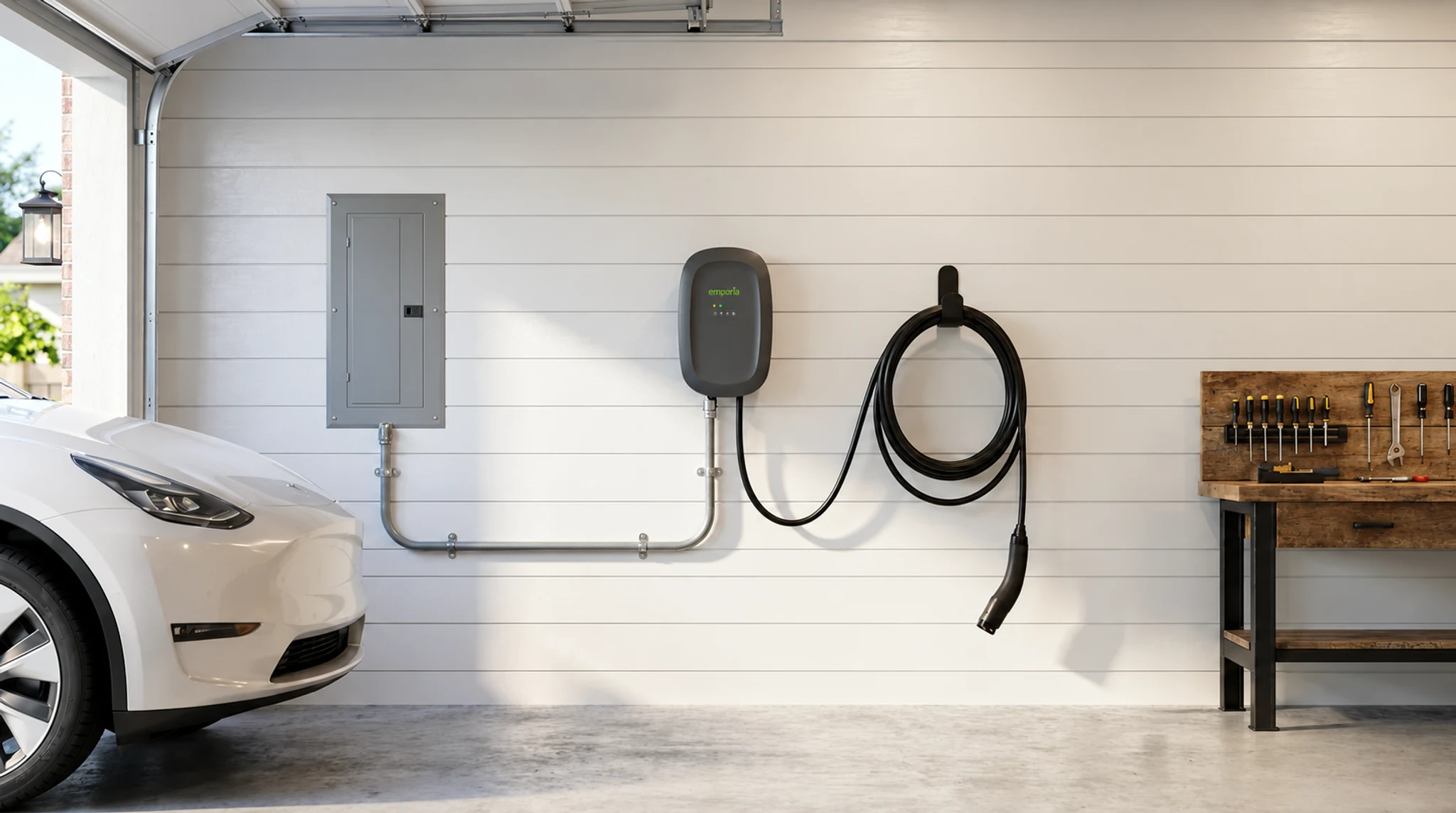
Emporia Classic · J1772
Hardwired configuration
- Vehicle connector: J1772; verify your car’s inlet. An adapter, if needed, must be approved for your vehicle and AC charging.
- Power: Manufacturer-supported hardwire configuration: up to 48A / 11.5 kW (11,500 W) at 240V.
- Placement: Indoor/outdoor-rated enclosure; outdoor wiring method needs installer approval.
- Why consider it: App scheduling and energy monitoring; a separate wall holster keeps the cable organized.
- Example 0–100% time: about 7.3 hours for the 75 kWh scenario below.
- Cost: Check the current seller price. Installation, permits and any wall repairs are separate.
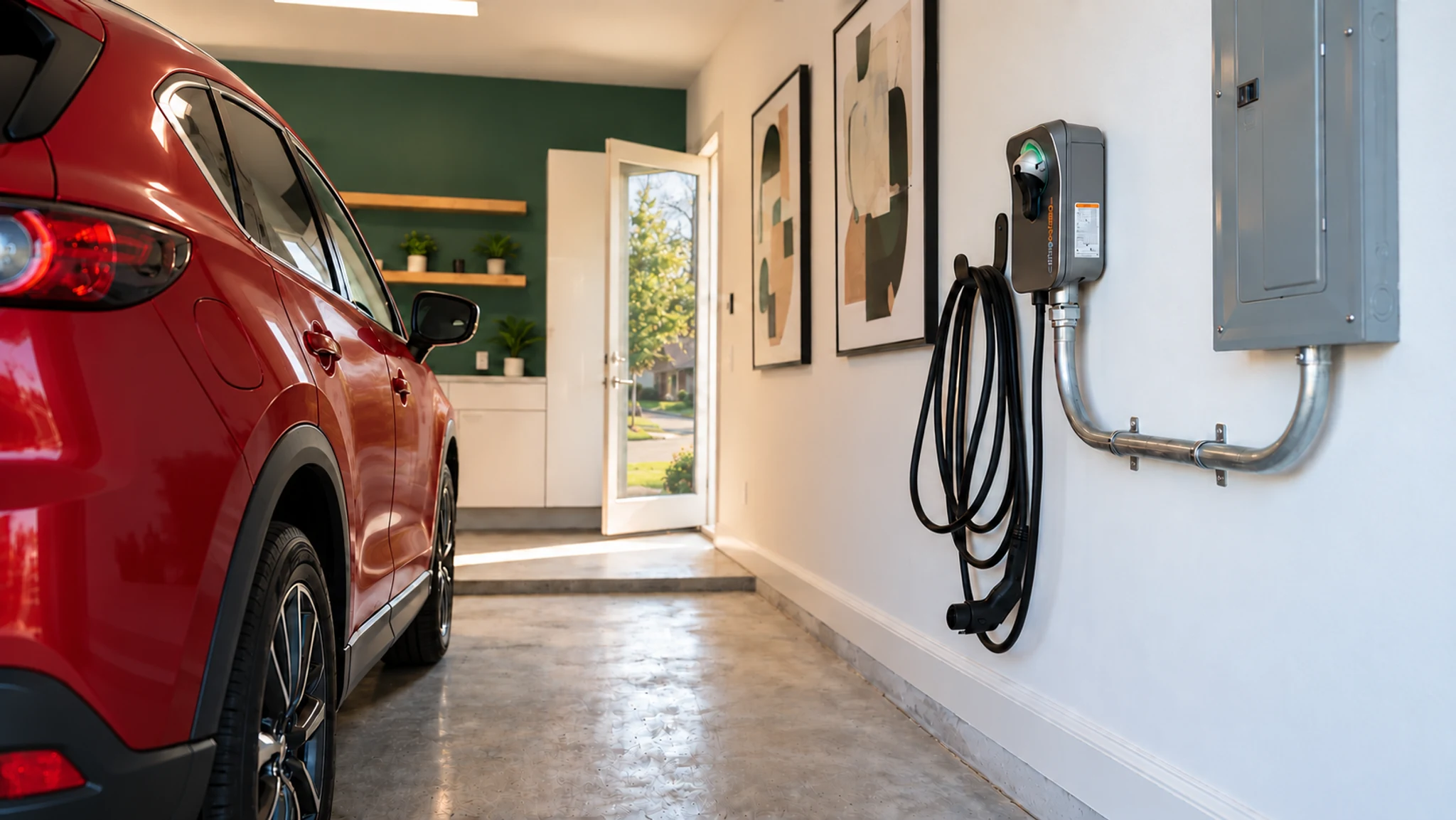
ChargePoint Home Flex · J1772
Hardwired configuration
- Vehicle connector: J1772; verify your car’s inlet. An adapter, if needed, must be approved for your vehicle and AC charging.
- Power: Manufacturer-supported hardwire configuration: up to 50A / 12 kW (12,000 W) at 240V.
- Placement: Indoor/outdoor equipment; ChargePoint recommends hardwiring outdoors.
- Why consider it: App-controlled scheduling with adjustable output and a 23-foot cable.
- Example 0–100% time: about 6.9 hours for the 75 kWh scenario below.
- Cost: Check the current seller price. Installation, permits and any wall repairs are separate.
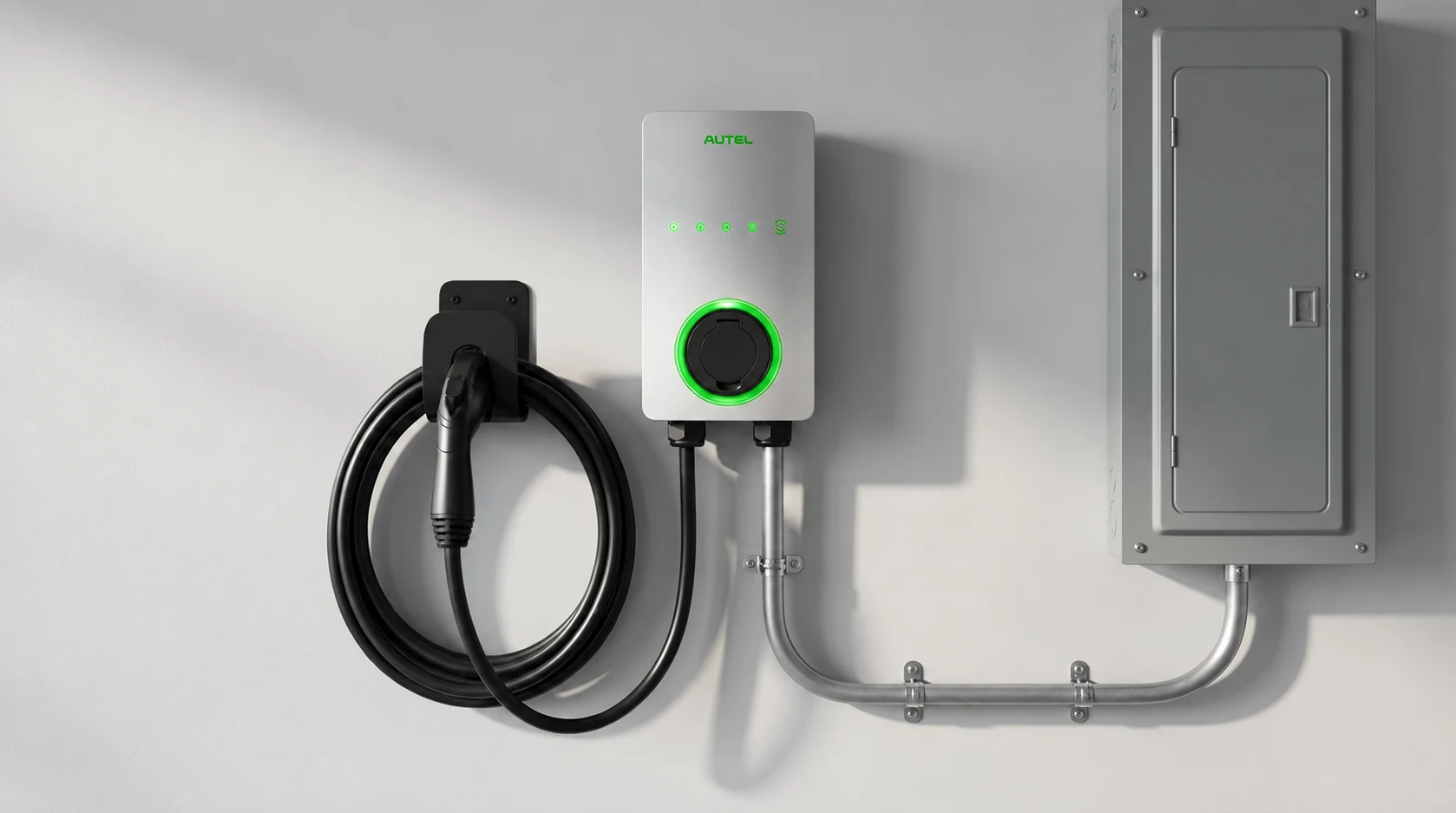
Autel MaxiCharger AC Elite · 50A J1772
Hardwired configuration
- Vehicle connector: J1772; verify your car’s inlet. An adapter, if needed, must be approved for your vehicle and AC charging.
- Power: Hardwired only for this model: up to 50A / 12 kW (12,000 W) at 240V.
- Placement: Indoor/outdoor NEMA 4 enclosure; placement and exposure need installer review.
- Why consider it: A 25-foot cable, separate holster and app scheduling offer flexible placement.
- Example 0–100% time: about 6.9 hours for the 75 kWh scenario below.
- Cost: Check the current seller price. Installation, permits and any wall repairs are separate.
For a 75 kWh usable battery charging from 0% to 100%, assuming 90% charging efficiency: hours ≈ 75 ÷ (charger kW × 0.90). At 9.6 kW that is about 8.7 hours; at 11.5 kW about 7.3 hours; at 12 kW about 6.9 hours.
Your vehicle’s AC limit, circuit setting, starting charge, temperature and tapering can make it slower. Daily top-ups are shorter; follow your vehicle’s recommended charging limit rather than routinely charging to 100%.
Specifications checked October 7, 2026. Maximum ratings are not a promise of installed output. The circuit, equipment configuration and vehicle must all support the selected setting. Listings, variants, prices and availability can change.
Not sure which fits? Request installer matching →Plan the installation route
Surface-mounted conduit
A visible, neatly secured route along the wall.
- Useful when opening finished walls is impractical.
- Can avoid drywall repair; length and obstacles still affect cost.
- The installer selects materials suited to the location.
Concealed wiring / rear entry
A cleaner appearance with the supply wiring hidden behind the wall.
- Worth considering when the wall or attic route is accessible.
- May require wall openings, patching and painting.
- Depends on approved rear entry, framing and a suitable wiring method.
Panel capacity & load management
Confirm what your electrical system can support before choosing charger output.
- The load calculation—not empty breaker spaces alone—guides the decision.
- A lower output or compatible load-management system may be an option.
- An upgrade is considered only after the electrician reviews the home.
Back to Your home. Your charger. A clear plan. →
Request my installer review →